
Israel Packing Guidelines
Download Printable Packing Guidelines Here
Luggage
ONE CHECKED SIZED BAG PER PERSON.
Most hotels offer valet service, but there will be times you must carry your own luggage while traveling, especially at airports. Don’t be more than you can manage.
Sharing one checked size between couples may be helpful. Others may prefer not worrying with checked luggage and can travel with just a carry-on and personal item. Less is more when traveling/organizing at each stop, but travel needs and preferences are different - do what works best for you - just ensure you leave extra space for the return home, and for easy repacking at hotels.
We will provide group Travel the Text luggage tags with your trip materials for easy group ID at the airport and hotels during the trip.
NOTE: For those checking luggage, pack at least one complete change of clothes, all essential medications, and basic toiletries in your carry-on or personal item. Checked bags can risk loss or delay.
Personal Item
Bus Bag
We recommend bringing a backpack or tote bag that you can use as your personal item on the airplane and as your “bus bag” during the trip. This “bus bag” is recommended for storing necessities that you may want available during the day on the bus, but not necessarily while hiking around each site, such as medications, extra snacks, change of socks/shoes, sweater/jacket, rain gear, power bank batter chargers, etc.
Day Pack/Site Bag
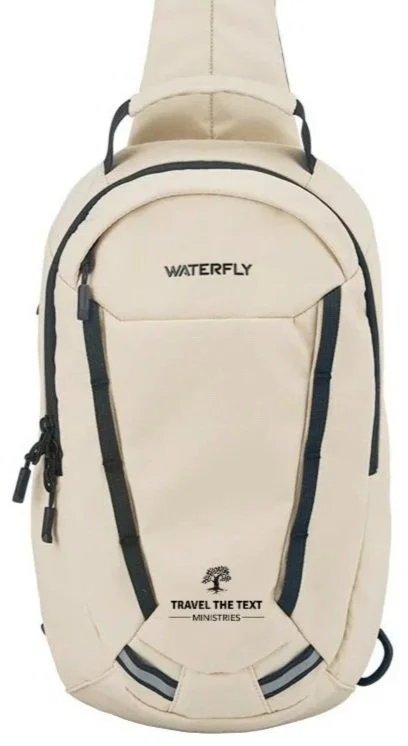
A smaller crossbody or hydration pack style bag is recommended for use on site, carrying only necessary items for 1-2 hours of on site exploration allowing you to hike hands free when needed, with everything you need, without being overly burdened. We will provide a recommended size of crossbody sling bag (as pictured to right or similar) or you can use a personal bag you prefer. Site bag should be able to carry: passport/money/phone, TTT Study Guide (provided), Bible, pen/highlighter, water, and seat cushion (provided/optional). Just what you need, nothing extra to get in the way of exploring.
Clothing/Toiletries
As with travel anywhere, weather can be unpredictable as we navigate a diverse lands from desert to hills to beaches. Be prepared for cooler mornings/evenings and for unseasonably heat waves. We expect comfortable temperatures in the 70’s and 80’s most days. Layers are recommended, as are lightweight, moisture wicking sun protective clothes. No fancy dinner clothes are necessary; older clothes or travel specific quick dry items that you can hand wash and hang dry overnight as needed are ideal. October is often the very beginning of rainy season, which means its unlikely we’ll see any but having a poncho, or rain jacket available is a good just in case.
SPECIFIC CLOTHING ITEMS TO PACK
Wide-brimmed hat: REQUIRED wear for sun protection each day. A must have; we will all look cool together.
Shirts: We recommend packing 3-5 comfortable base layer t-shirts (crew neck), that can layer with 2-4 sun protective long-sleeve shirt options. Moisture wicking, lightweight button up or crew neck shirts that offer sun protection and modesty are ideal. If you travel often, merino wool base layers can be a great investment, allowing you to multiple wears between washes.
Pants: 2-4 comfortable, quick dry (for wash and hang dry), perhaps hiking specific (but not required) pants are recommended. If you love Jeans or heavier materials that’s also fine - and hotels will offer “per piece” garment washing for a fee when needed. Otherwise, we recommend options you can wash/spot wash in the sink and dry overnight. Shorts are acceptable some days, but we recommend pants for better protection from sun, sand, or longer grasses/weeds we may be walking through. No leggings; when in doubt, pack looser fit options; religious sites will use their own discretion on what they deem acceptable or not.
Walking/Water Shoes: We recommend bringing two good walking shoe options on the trip to rotate in case of blisters. Good lace up hiking or trail running shoes with good traction, and ankle support if desired are recommended (Keen, Oboz, Merrells, are some good brands). Mid-rise hiking boots are great. A second pair of shoes that can double for water use and walking is great, such as Chaco or Teva Sandals, and Keen H2 sandals are favorites. Water shoes need a back strap so they don’t float away, and offer more stability for walking. If purchasing new shoes for the trip, take them on several good walks to BREAK THEM IN WELL ahead of the trip.
Socks/Underwear: Hiking or running specific socks made from nylon or merino wool are recommended (cotton and polyester socks are more likely to cause blisters - and take longer to dry after handwashing).
Swimsuit: You will have several swimming opportunities including at the Dead Sea, Red Sea, and hotel pools…even in March.
Jacket and light sweater for cooler days and plane ride is recommended. Mornings and evenings can be cooler and in springtime in these climates, as we navigate a diverse land, we could see a wide swing in temperatures during each day.
Required Documents
PASSPORT: With expiration date at least 6 months after your date of arrival in Israel.
Passport Color Copies: submit a color copy with your registration. Keep two additional copies, one in your checked luggage, and another elsewhere, separate from your passport in case of loss/theft.
Alternative Picture I.D. (i.e. Driver's License): We recommend packing your alternate ID separate from your Passport (one on your person, one in secure place in personal item, for example). Keep copy of passport with it.
Emergency Medical Information: Keep a document listing any known medical conditions, allergies (food, medicine, etc.), medicines, immunizations, insurance, etc. with your passport in case of emergency. If you have any existing medical concerns, please confirm with your doctor that you are clear to travel and provide a copy of your medical documents to your group leader.
Money
Debit/Credit Cards: ATM’s are available many places. Credit/debit cards and Apple Pay are widely accepted. Be familiar with your cards foreign transaction fees (Capital One, Chase Sapphire in particular offer cards with no foreign transaction fees).
Cash: ATMs are available, and provide local currency. US Dollars are also often accepted. Bring a variety of clean, neat bills for this option (torn or marked bills aren’t accepted).
Study Materials
Bible (small travel Bible, or Bible app on personal device is recommended; large study versions get heavy when hiking.)
Travel the Text Study Guide (provided by TTT)
Journal/Notebook
Pens/Pencils/Highlighters
Water & Snacks
Breakfast and dinner are provided buffet-style at your hotels. Lunch is not included most days, but we will provide options for buying what you wish at stops along the way most days. NOTE: Those with food allergies or sensitivities should always travel with supplemental snacks in case a suitable option for you isn’t available.
Reusable Water Bottoles or Hydration daypacks (i.e. CamelBak, etc.) with water bladders or refillable water bottles are recommended. We provide large bottles of water to refill your more portable containers.
Electrolyte supplements, such as Liquid I.V. or Ultima, in powder or tablet forms to easily add to your water as needed.
Snacks: pack your favorite protein/granola bars, and low-sugar snack foods to ensure you stay energized on hikes and walks between meals (protein bars, trail mix, dried fruit, jerky, crackers, almond butter or peanut butter pouches, etc.). Several familiar snacks can also be found at convenience stops along the trip. For those who need to easily understand ingredient labels for food allergies or preferences, make sure to pack extra snacks from home for when that’s not possible.
Other
Sunglasses: durable sunglasses (and a spare if you’re like us); polarized recommended.
Sunscreen and chapstick with high SPF
Medications & First Aid: Any prescription medications, inhalers for asthma, etc. We recommend you bring a mask to protect fellow group members if you begin to feel unwell. A first aid kit will travel with us, but please bring a personal supply of your preferred pain relievers, bandages, cough drops, cold/flu, stomach medications, instant cold packs, etc. Moleskin and Bodyglide can be helpful if you are prone to blisters or chaffing.
Motion-Sickness Prevention: We will travel many windy, hilly roads and be on a couple of boats! Even if you’ve never been motion sick, be prepared. We recommend Sea-Band bracelets, peppermint essential oil, hard ginger candies (gin-gins) for natural options and/or Bonine, non-drowsy Dramamine, etc.
Hand Sanitizer/Wet Wipes: You’ll want to “wash” your hands often when traveling.
Laundry soap: Travel detergent like “SinkSuds”, or even a simple bar of soap works well for washing clothes in the sink. Tide pens or shout wipes are also handy. Hotels will provide laundry service, per piece (think $5-$10 per item often for shirts/pants - pricey but can be a good option if you prefer to travel with jeans, or clothes you already have that aren’t quick dry…you may prefer to pay for laundry service rather than a new wardrobe if the items you’d buy are likely only for this trip).
Digital or Phone Camera: Extra memory cards and charging cords.
Cell Phones: Many will bring cell phones, which can double as camera/alarm clocks. Please check with your provider for international rates and plans before travel. Wifi “should” be available in all hotels, and sometimes on the bus. Clear storage space ahead of time and know how to back up your photos during the trip if possible.
Portable Battery Pack/Power Bank: having an extra external battery pack to recharge your phone (camera) during the day is a great resource.
Travel Alarm Clock if your cell phone will not work for this. Hotel wake up calls are always set but not always reliable.
Travel toilet tissue/wet wipes: Restrooms are not always stocked; be prepared.
Adapters/Converters: Bring EU friendly adapters, such as Type C for Israel. There are also likely to be a very limited number of outlets available, while you need to charge multiple things. We suggest adapters that can charge multiple items such as THESE on Amazon, or similar. Get what works best for the type of charging cord your devices require. Most of your devices such as laptops, phones, ipads, etc. are “dual voltage” so you do not need to bring a converter. Hair products often require one - but don’t bring it. Hotels provide these. Converters are often very expensive, heavy…and often you still end up with fireworks instead of dry hair (fried hair - not as good).
Cushion to sit on (optional, but rocks do get hard)
Small flashlight with new batteries
Washcloths are not often provided in European style hotels such as in Israel; hair dryers will be available.
Reusable Zip Snack Bags for repacking snacks, extra lunch, or other items during trip.
Sleep Aids: With jet-lag and new environments and sound, sleep can be more challenging when traveling. We recommend bringing sleep aids that include melatonin to help get sleep cycles on track quickly. Bring your favorite, or here are a couple recommendations: Olly sells a low dose melatonin gummy that’s easily found in most Walmart/Target type stores. Luna sells one on Amazon that features less melatonin, a kids version we like that’s lower dose…), and a version with none using other natural herbs for those sensitive to Melatonin. Magnesium lotion by LifeFlo can also help you relax while traveling both by plane or hotel.
Sound Machine/ear plugs & sleep aids: Some hotels and room locations may be noisier than others. We recommend bringing small travel sound machines for white noise, and/or ear plugs if you don’t want to wake up for every kid running by or call to prayer.
Airplane Specific:
Neck Pillow: If you can try to sleep in the plane, you may want neck pillow so you don’t end up on your neighbor’s shoulder. Inflatable and neck wrap styles are great.
Compression Socks: Many recommend these to help with circulation on the plane - no swollen ankles.
See above: ear plugs/sleep aids - also for plane!
DO NOT BRING
Graphic, patriotic, military, camouflage, or religious clothing: We are guests in this land and here to learn. We will visit many diverse places and cultures each day and our love and respect, not our clothing or insignia, define us. There will be many religious sites and secure areas we visit that do not allow clothing or hats with writing, insignia, flags, military or political reference, etc. of any kind. Leave these at home.
Expensive/flashy jewelry: Wedding bands are understandable, but the less you bring the better. Jewelry and other small valuables risk loss, being forgotten in hotel safes, falling out of backpacks, etc. Keep nostalgic/high value items at home.
Weapons of any kind are forbidden. This includes pocket-knives, pepper spray, etc. We will go through metal detectors often, sometimes without notice. Security may thank you for the souvenir but you aren’t likely to get it back…and you may be detained.
Modesty is required in this culture, especially in the many religious sites we visit, and local standards are often more conservative than those in the USA. Religious sites do not allow the following: sleeveless shirts, tank tops, tight-fitting shirts, leggings, low-cut collars (even v-necks depending on depth), shorts. Head coverings will be provided if required (men or women depending on site) but your hat will be acceptable and is recommended. Skirts are not required for women at any site; pants are fine. If you like to wear shorts, be sure to keep a pair of elastic waist pants you can slip on if needed, depending on the sites we are visiting each day.